
Can AI Keep a Real Creator's Page Posting Daily While She's on a Long Break?
By Marcus, AI generation expert at OFMAI · Updated
Yes for the content, no for the whole page. Generated photos, short clips and voice notes in a real creator's own look can fill a daily posting slot for weeks, but no tool holds her conversations, answers her comments or reacts to what happens that week. The practical move is to build the content before she goes: on OFMAI she creates one persistent character from 3 of her own reference photos, with no training step, and every photo and clip afterwards runs against that stored character, so the same look, body and morphology carry through the break.
Below: what has to exist before she leaves, how many posts a 30- or 60-day break needs and what that costs in credits, the parts no tool covers, what the platforms expect her to disclose, six routes compared side by side, and when running a page this way is the wrong plan.


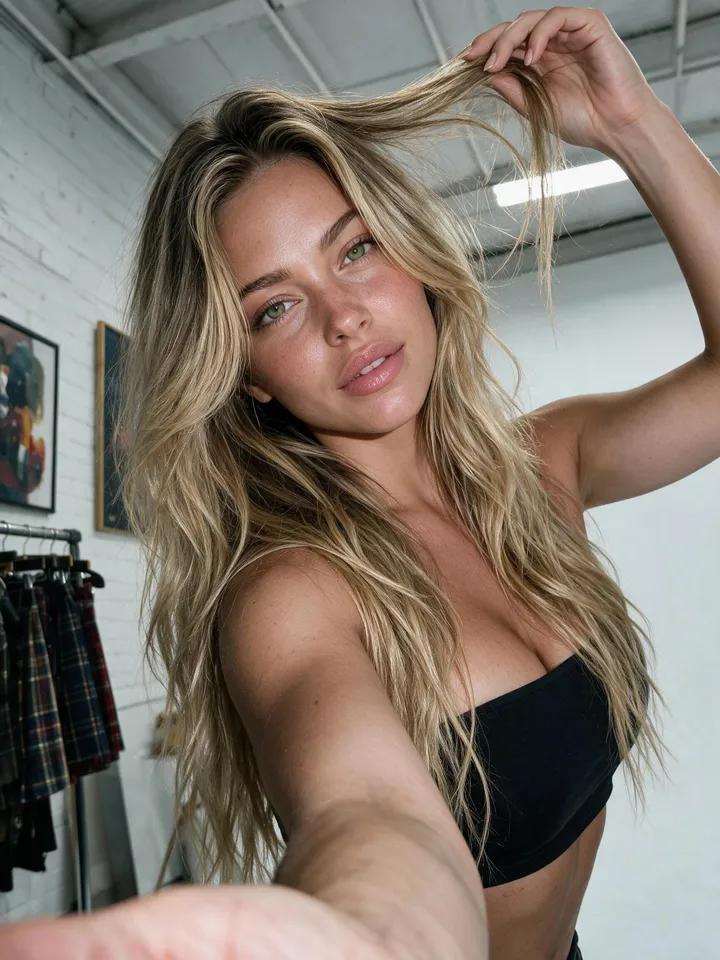
Can AI keep a real creator's page posting daily while she's on a long break?
Yes for the feed, no for the page as a whole. Generated photos, clips and voice notes of her own look can cover a daily slot for weeks; the replies, the comments and anything that has to answer this week's news cannot be made in advance by anyone, human or machine. Treating the feed and the relationship as one job is what makes these plans fail.
Every serious playbook on creator absence makes the same split in practice. Sozee's guide to keeping content timely when creators are unavailable, read in November 2026, builds its whole answer out of work done before the break — an evergreen bank, scheduled publishing, repurposed archive material and generated visuals — and still ends on a human final review of everything that goes out. It is a vendor's page, so its performance figures are self-reported and uncited; the structure is the part worth copying.
On OFMAI the piece that has to exist first is the character. It is created once, from 3 of her own reference photos — a portrait, a front view and a back view — with no training step, or from a text description, and it is then reused in every later generation. That is what makes sixty posts read as one person's two months rather than a new person per prompt.
What has to be ready before she leaves?
The character, built on an ordinary working day rather than the night before. On OFMAI it is 12 credits end to end — 6 for the candidate looks and 6 to confirm the one she wants and generate its reference angles — and it persists between sessions, so it is built once and not again next break.
A written shot list: one line per posting day, each line changing a single variable — outfit, location, pose, time of day — against identical wording for the rest. At 2 credits a photo, a list that long also prices the whole break before anything is generated.
A bank of posts that do not go stale. Sozee's guide, read in November 2026, fills it with tutorials, FAQs, behind-the-scenes and product highlights, and proposes a 5-3-2 weekly mix of five curated, three original and two repurposed posts. Anything tied to a date, a trend or a reply has to be struck off the plan instead: it cannot be produced early.
A voice, if she sends voice notes. Cloning her own voice is 10 credits once, or 8 to design one from a description, and notes then start at 2 credits each.
How many posts does a daily page need, and what does that cost?
Count the days, then add a margin for what review rejects. Thirty days at one photo a day is 60 credits and sixty days 120. Two short clips a week across a month is 56 credits at 480p, so a 30-day break at a photo a day plus two clips a week comes to 116 credits, and a 60-day break at the same rhythm 232.
Resolution is the main lever on the video line. A 5-second clip is 7 credits at 480p, 13 at 720p and 25 at 1080p, because cost scales with resolution and length — a 10-second 480p clip is 13. An image edit is 2 credits and is usually the cheaper fix when a frame is right apart from one detail, rather than generating the shot again.
Then size the plan around the number. Pro is 100 credits for $24.99 a month, Business 300 for $49.99 and Agency 1000 for $149.99 — on photos alone, 50, 150 and 500 shots. Starter is 30 credits for $9.99, about $0.67 a photo, and annual billing saves 25%.
One detail matters for a one-off batch: subscription credits renew each month, while purchased top-up credits never expire. A pre-break batch can be bought as a top-up instead of moving permanently up a plan, and failed generations are refunded automatically. Budget to overshoot either way — generate more frames than there are slots, so review has something to reject.
What can't AI cover while she's away?
The conversation. OFMAI is not a CRM, a fan-messaging tool or a chat-automation tool: it makes the content and does nothing with the people who see it. If her page earns from messages, someone she trusts is answering them or that income pauses with her, and no amount of pre-generated content changes that.
The publishing. OFMAI is not a scheduler or a publishing hub either — a batch leaves as exported files and goes out through whatever she already uses to post. Sozee's guide, read in November 2026, leans on the general-purpose schedulers for that step and warns that an automation configured months earlier breaks when a platform changes its rules, so someone needs to be able to look at it mid-break.
Anything reactive. A reply to a comment, a post about something that happened that week, a caption in her own voice on a bad day: none of it can be produced before she leaves. Leave 10 to 20% of the calendar empty rather than filling it with posts that will read as timed and generic.
And the announcement. Michelle Jackson's Creators Getting Paid newsletter (November 2023, read in November 2026) advises easing off front-facing work a week or two ahead and announcing a break plainly, without apologising or making an event of it. A page that quietly keeps posting while she is gone is a different decision from one that says she is away, and it is worth making that decision on purpose.
Does she have to tell her audience the posts are AI-generated?
On Instagram the labelling rule is narrower than it sounds, and this question sits near its edge. TechCrunch reported on 31 August 2026 (read in November 2026) that Instagram renamed its 'AI creator' tag to 'AI-generated profile' and will reduce the reach of accounts featuring an AI-generated person without it, while the same report says the label does not apply to people who use AI to edit photos, polish captions or make graphics.
So a real creator whose profile subject is herself is not the target of that rule. But the same report notes that Instagram did not define 'substantially created with AI', and a month of entirely generated images of her sits closer to that line than a retouched photo does. Read each platform's current wording before the break rather than after it, and assume the safe answer is to disclose — every platform she posts on sets its own rules on AI-generated content.
The consent question is settled earlier still. On OFMAI a character built from reference photos has to be her, or someone who has explicitly authorised it; generating a real person without their consent is not a use of the product.
What should be repurposed instead of generated?
Her archive first. Sozee's guide, read in November 2026, puts one original at five to ten derived pieces across platforms, and its steps are plain enough to copy: pick what already performed, cut clips out of it, adapt the framing and the caption per platform, then test what lands.
Generation is for the gaps the archive cannot fill — the outfit she never shot, the season she will be away for, the location she has no photos of. Mixing the two also keeps the break from looking like one continuous style: an all-generated month reads uniform in a way an archive-plus-new month does not.
An approved still is the cheapest route into video, too. Animating a frame she already signed off on costs from 7 credits for 5 seconds and keeps the look she approved, instead of describing the scene again in words and hoping the person comes back the same.
What are the routes, side by side?
Archive and evergreen bank only. No new material, no tool cost and nothing that can drift — against a hard ceiling: when the bank runs out, the page stops. Right for a two- or three-week break by a creator with a deep archive.
Archive plus a scheduler. The same ceiling, stretched by repurposing, and the route Sozee's guide, read in November 2026, spends most of its length on. Cheap and honest; it still needs someone able to fix the automation while she is gone.
A stand-in or a second shooter. Genuinely new photographs without her, which solves volume and breaks continuity, because it is visibly not her. Works for a page built on a theme rather than on a person.
A general-purpose image generator. Cheap per image and endlessly flexible, and it produces a slightly different person on every prompt. Fine for backgrounds, products and graphics; wrong for sixty posts that have to be the same woman.
A local open-source setup. The most control, the weights on her own disk and no per-image cost once it runs — paid for in a GPU, a setup day and ongoing maintenance, and not something to configure the week she leaves.
A stored-character studio, which is what OFMAI is: one character from 3 reference photos, no training and no GPU, reused across photos, video, voice notes and image edits in the browser, at 2 credits a photo. The trade-off is paying per credit rather than owning hardware, and nothing runs locally.
When is running a page this way the wrong plan?
When the audience is paying for her presence rather than her pictures. If live interaction is what sells, a flawless feed with nobody behind it is worse than a posted return date: it spends trust on the one thing she is best at.
When the break is short. Under two weeks, an archive and a scheduler are enough, and a character plus a sixty-line shot list is more setup than the problem deserves.
When nothing recurs in her images, or when she wants the weights on her own machine. A general-purpose generator covers the first and a local open-source setup the second; OFMAI is the opposite trade on both, and says so.
And when she cannot or will not disclose it. If a platform's rules, a brand agreement or her own line would be crossed by a generated feed, the honest version is fewer posts, announced — not more posts, unexplained.
Before she leaves: the checklist
- Build the character on an ordinary working day: 12 credits once on OFMAI, from 3 of her own reference photos or from a description, then reused in every later generation.
- Write the shot list before generating anything — one line per posting day, one variable changed per line. At 2 credits a photo it prices the break up front.
- Clone or design the voice if she sends voice notes: 10 credits to clone her own, 8 to design one, then notes from 2.
- Generate more frames than there are slots and review them as a grid, not one at a time — drift is invisible in a single photo and obvious in a contact sheet.
- Fix a near-miss with an image edit at 2 credits instead of generating the whole shot again.
- Animate only approved stills: from 7 credits for 5 seconds at 480p, 13 at 720p.
- Leave 10 to 20% of the calendar empty, and nominate a human for messages, comments and the one post that has to be written that week.
- Check each platform's current AI-disclosure wording before the break, and announce the break plainly — Creators Getting Paid, read in November 2026, says not to apologise for it.
OFMAI in numbers
- creators signed up
- 13,000+
- photos and videos generated
- 72,000+
- videos generated
- 11,000+
Frequently asked questions
Can AI keep a real creator's page posting daily while she is on a long break?
Yes for the content, no for the conversations. Photos, short clips and voice notes in her own look can be generated before she leaves and posted daily for weeks, but messages, comments and anything reactive still need a person. On OFMAI she builds one character from 3 of her own reference photos, with no training step, and every later generation runs against it, so the same look, body and morphology hold across the break.
How much content does a 30-day break need, and what does it cost?
About one post a day plus a couple of short clips a week. Thirty photos is 60 credits and eight 5-second 480p clips 56, so 116 credits for the month, plus 12 once for the character. Sixty days at the same rhythm is 232. Pro is 100 credits for $24.99 a month and Business 300 for $49.99.
Will OFMAI post it for her while she's away?
No. OFMAI generates and exports; it is not a scheduler or a publishing hub, and it is not a CRM or a fan-messaging tool. The batch leaves as files and goes out through whatever she already uses to publish, and someone has to be available to handle messages and comments.
Does she have to label the posts as AI-generated?
Check the platform, and assume yes if in doubt. TechCrunch reported on 31 August 2026, read in November 2026, that Instagram reduces the reach of profiles featuring an undisclosed AI-generated person, while exempting people who use AI to edit photos or polish captions — and that it did not define 'substantially created with AI'. A real creator posting a fully generated month sits between those two cases.
How does the page keep looking like the same person across sixty posts?
Because the generations run against a stored character rather than a fresh description each time, so the same look, body and morphology carry over. Change one variable per shot — outfit, location, pose or light — and keep the rest of the wording identical, then review each batch as a grid. If a frame is almost right, an image edit is 2 credits.
Can her voice notes keep going too?
Yes, if the voice is set up before she goes. A voice clone is 10 credits once, designing a voice from a description is 8, and notes then start at 2 credits each, in the same place as the photos and clips. What they cannot do is answer anything: a pre-written note is not a reply.
Is a generated feed better than posting nothing for a month?
It depends on what her audience pays for. If it pays for her pictures, a consistent feed beats silence. If it pays for her presence, a posted return date and a lighter schedule beat a daily feed with nobody behind it. A middle route — archive and evergreen posts, a few generated fills, 10 to 20% of the calendar left open — is usually the honest answer.
Related: Build a character from 3 of your own photos · Batch a month of content in one sitting · Turn an existing archive into new content · Animate approved stills · Clone your voice for voice notes · Who answers the messages · Platform rules and AI disclosure · OFMAI pricing · Set lifestyle photos in a specific city · Talking video in her own cloned voice
OFMAI generates synthetic imagery. Uploading photos or cloning the voice of a real person requires that person's explicit consent, enforced by automated and human moderation. Disclose AI-generated content wherever the platform you publish on or applicable law requires it.