
Do You Still Need Human Chatters If Your AI Model's Content Is Fully Generated?
By Marcus, AI generation expert at OFMAI · Updated
Yes. Generating the content and holding the conversation are two different jobs, and automating the first does not remove the second. OFMAI generates the photos, short videos, voice notes and image edits of one consistent AI character, but it is not a CRM, a fan-messaging tool or a chat-automation tool: nothing in it answers a subscriber, qualifies a buyer or closes an upsell.
What fully generated content changes is the supply side. A chatter is never blocked waiting for a shoot, and a request that used to need a shoot day becomes a generation at 2 credits for a photo or 7 credits for a five-second clip. Who writes the message and takes responsibility for it is still a staffing decision - and partly a rules decision, since Reuters reported on 30 July 2024 that the largest subscription creator platform's terms then stated that creators could not use an AI chatbot to write chats or direct messages.

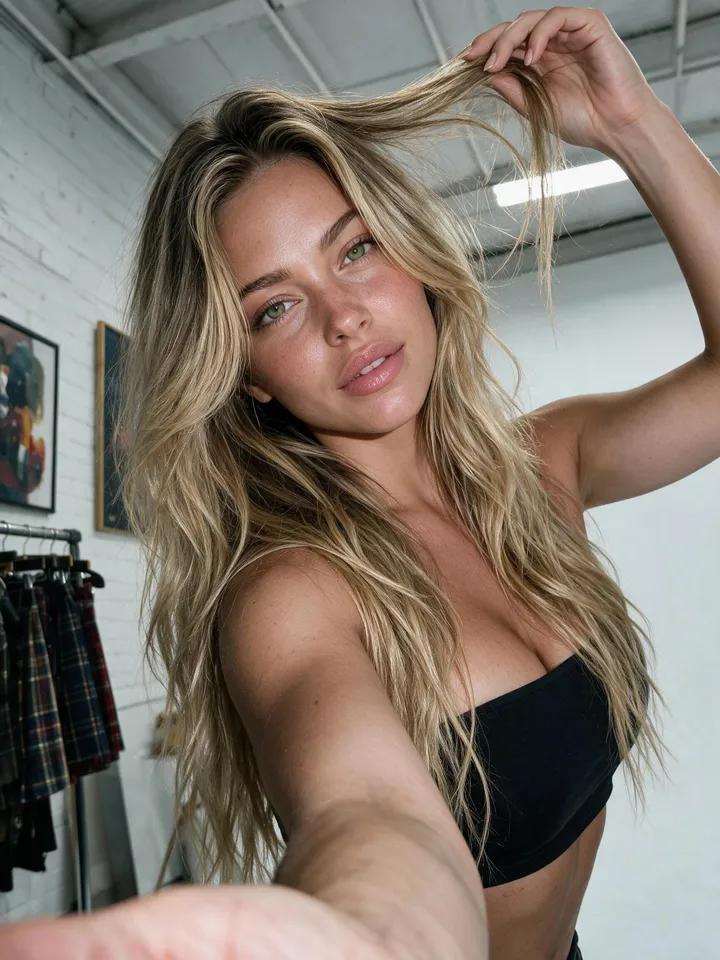

Do you still need human chatters if your content is fully AI-generated?
Yes, in almost every setup that earns money. Generated content removes the camera, the location and the wait; it does not remove the conversation. Someone still has to answer a new subscriber in the first minutes, work out what they want, send the right thing at the right price and handle the person who spends more than everyone else combined. That someone is you, a hired chatter, or an assistant with a human approving the sends - never the content generator.
An AI creator page has two layers with separate bills. The content layer is what OFMAI does: one character built from 3 of your own reference photos or designed from a text description, then photos at 2 credits, image edits at 2, five-second clips from 7 credits, a cloned voice at 10 and voice notes from 2. The conversation layer is a different product category and a different cost line.
What does fully generated content change in the inbox?
Turnaround, and nothing about the conversation itself. The slowest part of a paid request has always been producing what was asked for; with a stored character you generate it in minutes, in the same look, body and morphology as everything else on the page, so a chatter can promise something and deliver it inside the same conversation. A specific outfit, a specific room, a fifteen-second clip: 2 credits a photo, 7 to 25 credits for five seconds depending on resolution, and failed generations refunded automatically.
What stays: the subscriber is still talking to someone. They ask questions no generator answers, push on price, want to be remembered, and some will ask directly whether there is a person on the other end. Synthetic content makes the honesty of that answer more load-bearing, not less.
What do human chatters still do better?
High-value closing and anything emotionally unusual. Comparisons converge on the same split, including those written by companies selling AI chat: routine replies and follow-ups automate well, while customs, big baskets and the few subscribers who drive most of the revenue stay human. Desirely, an AI chat vendor, models a hybrid in which the assistant carries about 90% of message volume and a human handles about 10% of it, and puts that 10% at more than half of revenue (desirely.co, read 12 November 2026) - a vendor's own figure, not independent data.
The other thing a person brings is accountability: noticing a conversation that has gone wrong, a subscriber in distress, a request that should be refused. On a page running entirely on generated content, that judgement is the one genuinely human thing left, which is an argument for keeping it rather than automating it away.
What does an AI chat assistant do better?
Speed, coverage and consistency. It replies in seconds at any hour, holds many threads at once, never forgets a follow-up, and keeps structured notes on each subscriber that stay with the page rather than leaving with an employee. Those are real advantages on the first reply, the re-engagement message and the routine paid send.
The limits are as consistent: it is weakest exactly where the money is, on the long personal conversation, and it is an exposure if it sends unsupervised. Cost claims here are mostly self-reported - the same vendor puts human chatter commissions at 8% to 20% of chat revenue and its own tiers at 8.5% to 20% (desirely.co, read 12 November 2026) - so treat published margins as marketing and test on one page.
What do the three staffing setups cost?
All-human: commission is the visible cost, and recruitment, training, scheduling and turnover are the rest. Desirely models a page earning 3,000 EUR net with a 15% commission of 450 EUR and a real monthly cost near 1,540 EUR once management and training are counted (desirely.co, read 12 November 2026, the vendor's own modelling). Whatever your numbers, a chatter costs more than their percentage.
Hybrid - the assistant drafts, a person approves and owns the big conversations - is where most pages land, and the setup platform rules point to. Unsupervised automation is cheapest on paper and carries the real downside: a bad send nobody reads, on platforms that expect a human behind the messages.
The content bill is separate from all three and usually smaller. OFMAI is $9.99 a month for 30 credits, $24.99 for 100, $49.99 for 300 and $149.99 for 1000 - about $0.67 a photo on Starter, or 500 photos a month on Agency across several personas. Annual billing saves 25%, subscription credits renew monthly, purchased top-up credits never expire.
Do creator platforms allow fully automated messaging?
Not reliably, and the rules move. Reuters reported on 30 July 2024 that the largest subscription creator platform's terms then barred using an AI chatbot to write chats or direct messages, which is why agencies using AI drafts have a person send them; later coverage disagrees on the current wording. Read your own platform's terms and acceptable-use policy rather than a vendor's summary of them.
Disclosure is a separate and growing obligation. California's SB 243, in force since 1 January 2026, imposes disclosure, safety-protocol and reporting duties on operators of companion chatbot platforms and creates a private right of action (Skadden client note on the California companion chatbot law, read 12 November 2026). Whether it reaches a creator's direct messages is unsettled, but a human in the loop and an honest answer when asked is the low-risk setup.
When do you not need a human chatter?
When you are the chatter. A solo creator with a few dozen active conversations usually does better answering them personally, with an assistant drafting at most; hiring is a volume decision, and a chatter who costs more than the conversations they handle is a loss whatever the content costs. And when the page does not sell by message at all - brand UGC, ad creative, a grid of posts - there is no inbox and so no chatter.
To be clear about our own limits: if what you need is the messaging layer, OFMAI is the wrong purchase. It is not a CRM, a fan-messaging tool, a chat-automation tool, a scheduler or a publishing hub. Buy a chat product for the inbox and judge it on the inbox. OFMAI sits on the content side: one character, built in the browser with no GPU and no training, generating photos, short videos, voice notes and image edits fast enough that the conversation is never waiting - at $149.99 a month for 1000 credits if you run several personas.
Eight jobs in the inbox, and who handles each better
- First reply, under a minute, at any hour - an AI assistant. A human on a shift cannot cover the night.
- Many simultaneous threads - an AI assistant; a chatter handles a dozen or two at a time.
- Routine paid sends and scripted offers - an AI assistant, for consistency; a good chatter matches it and a tired one does not.
- Follow-ups and re-engagement - an AI assistant, because it never forgets and a person does.
- Memory of who each subscriber is - an AI assistant keeps notes that stay with the page; a chatter's knowledge leaves with the chatter.
- Custom requests and high-value closing - a human. This is where the revenue comes from.
- Emotionally unusual, sensitive or escalating messages - a human, with no exception worth making.
- Delivering what was promised - neither: that is the content layer, 2 credits a photo, 7 for a five-second clip, 2 for a short voice note on OFMAI.
OFMAI in numbers
- creators signed up
- 13,000+
- photos and videos generated
- 72,000+
- videos generated
- 11,000+
Frequently asked questions
Do I still need human chatters if my AI model's content is fully generated?
Yes, unless you answer the messages yourself. Generating content and holding a conversation are separate jobs: a content studio produces the photos, clips and voice notes, and a person or a supervised assistant handles the inbox. Fully generated content changes how fast a request can be delivered, not who is accountable for the conversation.
Can an AI handle all of my fan messaging?
Technically yes, in practice rarely well, and on some platforms not within the rules. Assistants are strong on first replies, volume, follow-ups and routine paid sends, and weak on custom requests, high-value closing and anything emotionally unusual. Most pages run a hybrid where the assistant drafts and a person approves the sends and owns the biggest conversations.
Does OFMAI do fan messaging or chat automation?
No. OFMAI generates the content - one consistent AI character in photos, short videos, voice notes and image edits - and nothing else. It is not a CRM, a fan-messaging tool, a chat-automation tool, a scheduler or a publishing hub. You generate and export, then post and message wherever you already do.
How much do human chatters cost compared with an AI chat assistant?
Published figures come mostly from vendors. Desirely, an AI chat vendor, puts human chatter commissions at 8% to 20% of chat revenue and its own tiers at 8.5% to 20%, and models the real cost of a chatter for a page earning 3,000 EUR net at about 1,540 EUR a month once recruitment, training and management are counted (desirely.co, read 12 November 2026). Those are self-reported numbers; test on one page before restructuring.
What does it cost to generate the content a chatter sells?
On OFMAI, 2 credits a photo, 2 an image edit, 7 credits for five seconds at 480p, 13 at 720p and 25 at 1080p, 10 credits to clone a voice and from 2 for a voice note. Plans run from $9.99 a month for 30 credits to $149.99 for 1000, and failed generations are refunded automatically.
Are AI chat assistants allowed on creator platforms?
Check the platform you publish on, because the rules differ and change. Reuters reported on 30 July 2024 that the largest subscription creator platform's terms then barred using an AI chatbot to write chats or direct messages, which is why the common setup is an assistant that drafts and a verified person who sends. Read the current terms yourself rather than a vendor's summary.
Should I disclose that messages are written with AI?
Assume yes, and never pass an assistant off as a person when someone asks directly. California's SB 243, in force since 1 January 2026, imposes disclosure, safety-protocol and reporting duties on operators of companion chatbot platforms and gives users a private right of action (Skadden client note on the California companion chatbot law, read 12 November 2026). Its application to creator direct messages is unsettled, but honesty survives a rule change.
Related: AI influencer generator · AI model generator · Generate a month of content in one sitting · The minimum budget to launch an AI creator page · AI voice generator for creators · OFMAI pricing and credits
OFMAI generates synthetic imagery. Uploading photos or cloning the voice of a real person requires that person's explicit consent, enforced by automated and human moderation. Disclose AI-generated content wherever the platform you publish on or applicable law requires it.
Keep the inbox waiting on nothing
Build one character from 3 of your own photos or from a description, then answer any request with new photos, short videos and voice notes in the same look, body and morphology. Photos from 2 credits, five-second clips from 7, voice notes from 2, plans from $9.99 a month. Who writes the messages is still your call.