
Do You Need to Fine-Tune a Model, or Is a Detailed Prompt Enough for a Recurring AI Character?
By Marcus, AI generation expert at OFMAI · Updated
No, and no: for a character you will post week after week you almost never need to fine-tune a model, and a detailed prompt on its own will not hold the same person either. Text names a type of person, not a specific one, so each generation reinvents the details - the 2026 getimg.ai consistency guide lists structured prompt templates as one of four methods and calls that one "the least reliable method" (8 April 2026).
The route most people actually want sits between the two: a studio that stores the character instead of training one. On OFMAI you build a character from 3 of your own reference photos - a portrait, a front view and a back view - or from a text description if the character does not exist yet, with no training step and ready in minutes, then reuse it in every photo, short video, voice note and image edit with the same look, body and morphology. Below: why prompts drift, the four routes costed, and the volume at which fine-tuning really does pay back.
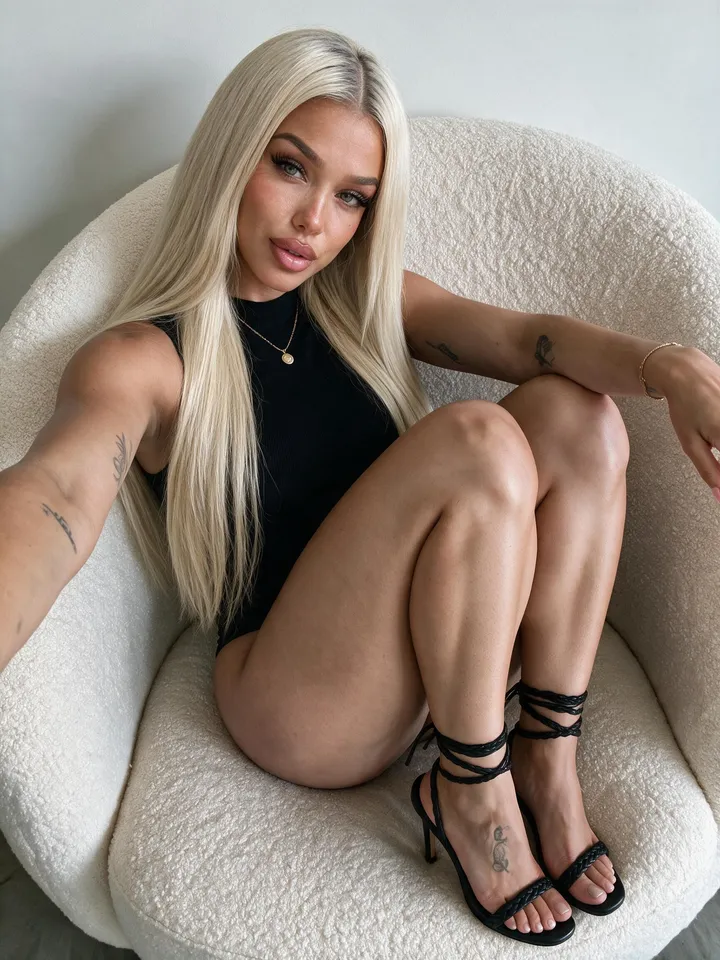
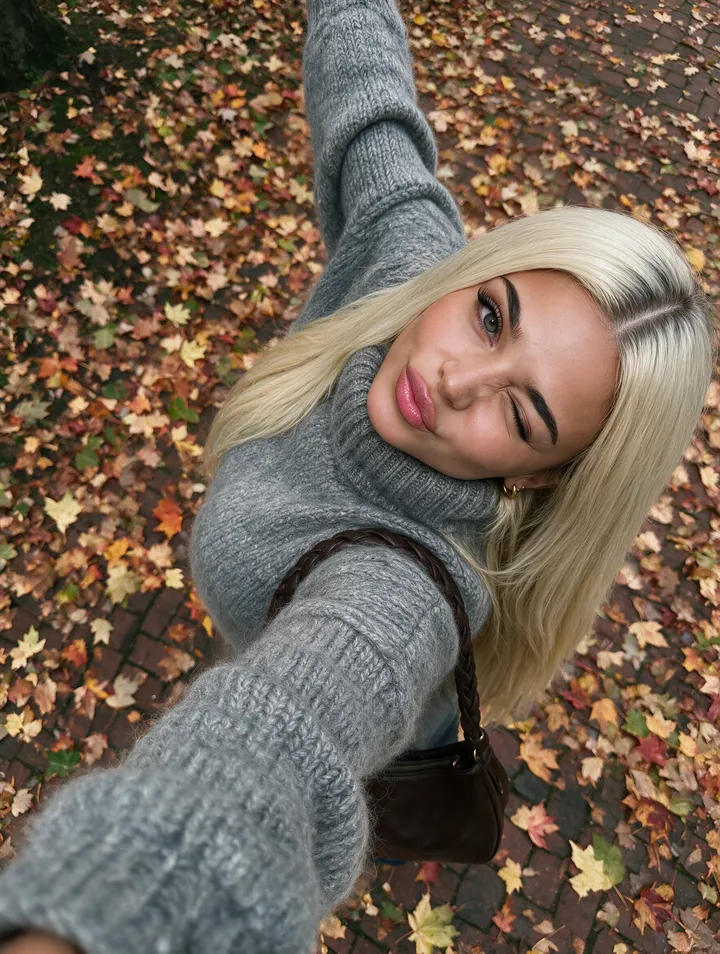
Why isn't a detailed prompt enough on its own?
Because a prompt is a description, not an identity. Every generation starts from a fresh random seed, so the model re-draws someone who matches your words, and "a woman, 30s, red hair, green eyes, freckles" matches thousands of different people (getimg.ai, 8 April 2026). Adding adjectives narrows the type; it never returns you to the same individual.
It also moves under you over time. A practitioner write-up on building a character pipeline reports the same prompt returning a different person between runs, with results shifting as batch size changes and as the provider updates the model underneath (DEV Community, sm1ck, read 19 November 2026). Prompt templates are still worth keeping and versioning - they hold hair colour, wardrobe, framing and light - but they are the floor, not the anchor.
What are the routes to a recurring AI character?
Four, and what separates them is what each one stores. A structured prompt template stores words. Reference-image conditioning stores nothing at all: the reference is attached again on every generation, which is also where style bleeds, since a reference meant to carry only the person tends to drag its outfit, lighting and background along with it (DEV Community, sm1ck, read 19 November 2026). A fine-tune - LoRA or DreamBooth - stores the subject in the weights. A stored-character studio stores the character in the product, so there is no dataset to curate and no reference to re-supply.
The 2026 getimg.ai guide lists the same four and recommends the dedicated-character route for most production work, noting that the advantage training used to hold over reference methods has "narrowed significantly" with current models (8 April 2026). OFMAI is that route: the character is created once for 12 credits - 6 for the candidate portraits and 6 to confirm your pick and generate the front and back views - and then reused in everything that follows.
What does fine-tuning cost in photos, hours and money?
Photos first. A LoRA or DreamBooth run wants at least 15 to 30 curated images (getimg.ai, 8 April 2026), and a practitioner working from the same 15-to-30 range adds the part that decides the result: 20 clean, varied, captioned images beat 100 messy ones, and 30 shots from a single angle teach a pose rather than a person (DEV Community, sm1ck, read 19 November 2026). Close-up-only datasets are the known trap - they will not hold body proportions, so full-body frames have to be in the set.
Then hours and hardware. Setup is measured in hours rather than minutes (getimg.ai, 8 April 2026), with community guides put at 2 to 4 hours (invideo AI, 27 July 2026). Training SDXL-based weights at 1024x1024 wants roughly 24 GB of VRAM at batch size 2 to 4, and a full run costs a few dollars on a rented GPU, from minutes to hours of GPU time (DEV Community, sm1ck, read 19 November 2026).
The cost people forget is the recurring one: trained weights are bound to a base-model version, so an update means retraining, while a reference-led route carries across models and can be corrected mid-production (invideo AI, 27 July 2026). And a trained character is still only photos - video and voice remain separate stacks to assemble.
What does a stored character cost instead?
No dataset and no training run. Three of your own reference photos - a portrait, a front view and a back view - or a text description, and the character is ready in minutes in the browser, with no GPU and nothing to install. That character costs 12 credits once.
After that you pay per output rather than per retrain: 2 credits a photo, 2 an image edit, from 7 credits for a short video and 25 for five seconds at 1080p, 10 to clone a voice and then generate voice notes in it. Plans run from $9.99 a month for 30 credits - about 15 photos, roughly $0.67 each - up to $149.99 a month for 1000 credits. Annual billing saves 25 per cent, purchased top-up credits never expire, and failed generations are refunded automatically.
How consistent is each route in practice?
Honestly: nobody has published an independent benchmark comparing prompt-only, reference-led and trained routes on the same model with the same character, so every figure below is the author's or the vendor's own. One practitioner's tests put a trained LoRA at 87 to 96 per cent consistency against 95 to 98 per cent for a zero-shot reference-image generator, on 1 to 5 reference images rather than the 5 to 50 a LoRA asked for (Segmind, 8 September 2025). A video-production FAQ reports the opposite ordering for tight shot-to-shot work and frames the whole question as "a trade-off between setup cost and lock tightness, not right versus wrong" (invideo AI, 27 July 2026).
Where the sources do agree is the bottom rung: text alone comes last. A stored character takes the disputed variable out of the question, because consistency then depends on neither a dataset you curated well nor a reference you remembered to attach - the same character is used in every generation by default, which is why the same look, body and morphology carry across outfits, angles and scenes.
When is fine-tuning still the right answer?
At volume, in one unchanging style, with the pipeline in your own hands. The threshold most often cited is a flagship character carried across more than 50 shots in a style that does not change, where you control the training pipeline and can pin a model version (invideo AI, 27 July 2026). Frame-by-frame serialised work - comics, animation - and stylised or licence-controlled pipelines are the other cases where trained weights still win (Segmind, 8 September 2025).
Two more reasons have nothing to do with output quality: you want weights you keep as a file and can run offline with no platform in the loop, or what you are really training is a style or a garment family rather than one person. OFMAI is a hosted web app, not a local model or a downloadable checkpoint, so if offline control is the requirement, train - and budget for the GPU, the dataset and the retraining after each model update.
What if the character does not exist yet?
Then fine-tuning is the wrong question, because there is nothing to train on. A run needs 15 to 30 photos of the person (getimg.ai, 8 April 2026), and an invented persona has none - you would have to generate them with the very model that keeps changing the person, then hand-curate that set, which is the problem the training was meant to solve. A text description is enough on OFMAI: design the character from the description, and it is the same person in every generation afterwards.
If the character is you, or a model who has signed a licence, the three photos you already own are the whole dataset. OFMAI is not for depicting a real person without their consent.
Which route suits a character that posts every week?
Weekly posting is a volume problem rather than a quality problem: the setup cost has to be paid once, and the cost per output has to be small. A month of weekly posting is roughly 20 to 30 photos and 4 to 8 short clips - at 2 credits a photo and from 7 a clip, that sits inside the 300 credits of a $49.99 plan, with no training run, no dataset and nothing to retrain when a model changes.
Keep the prompt template anyway, on top of whichever route you choose. Name the wardrobe, the hair colour, the framing and the light in the same words each time, keep the template in a file you version, and test a character on its own before putting two of them in one scene (getimg.ai, 8 April 2026). Reference variety follows the same rule the training people learned: mix close-up, three-quarter and full-body frames rather than collecting one angle.
The four routes at a glance
- Structured prompt template - stores words. Free, portable, and ranked "the least reliable method" of the four (getimg.ai, 8 April 2026). Keep it as a supplement, never as the anchor.
- Reference-image conditioning - stores nothing: the reference goes in again every time, and style can bleed from it along with the person (DEV Community, sm1ck, read 19 November 2026). Portable across models, weak as a long-term anchor.
- Fine-tune (LoRA or DreamBooth) - stores the subject in the weights. 15 to 30 curated images minimum (getimg.ai, 8 April 2026), 2 to 4 hours of setup (invideo AI, 27 July 2026), about 24 GB of VRAM and a few dollars a run on rented hardware (DEV Community, sm1ck, read 19 November 2026), plus retraining when the base model moves.
- Stored character (OFMAI) - stores the character in the product. 3 reference photos or a text description, no training, ready in minutes, 12 credits once, then 2 a photo, 2 an edit and from 7 a short clip.
- Pick by volume and ownership: more than 50 shots in one locked style, or weights you must own and run offline, favours training (invideo AI, 27 July 2026). A weekly character, several personas, or photos plus video plus voice in one place favours a stored character.
- Pick by what exists: a real person with a photo archive can be trained on. An invented persona cannot, so a description-built character skips the dataset problem entirely.
OFMAI in numbers
- creators signed up
- 13,000+
- photos and videos generated
- 72,000+
- videos generated
- 11,000+
Frequently asked questions
Do I need to fine-tune a model, or is a detailed prompt enough for a recurring AI character?
Usually neither. A detailed prompt is not enough, because text describes a type of person and every generation starts from a fresh seed, which is why structured prompt templates rank as the least reliable of the four consistency methods (getimg.ai, 8 April 2026). Fine-tuning works but asks for 15 to 30 curated images, 2 to 4 hours of setup (invideo AI, 27 July 2026) and retraining when the base model updates. A stored character is the middle route: on OFMAI you build one from 3 reference photos or a text description with no training, in minutes, for 12 credits, then every photo, clip, voice note and edit reuses it with the same look, body and morphology.
How many photos does fine-tuning a character need?
At least 15 to 30 curated images for a LoRA or DreamBooth run (getimg.ai, 8 April 2026), and quality decides the outcome more than count: 20 clean, varied, captioned images beat 100 messy ones, and 30 frames from one angle teach a pose rather than a person (DEV Community, sm1ck, read 19 November 2026). Include full-body frames, because a close-up-only set will not hold body proportions. OFMAI needs 3 photos, or none at all if the character is designed from a description.
Are prompt templates useless then?
No - they are just not an identity. A template that names hair colour, wardrobe, framing and light in the same words every time removes a whole class of variation, and it is worth keeping in a version-controlled file (getimg.ai, 8 April 2026). It works best layered on top of a route that actually stores the person, whether that is trained weights or a stored character.
How long does it take to fine-tune a character?
Setup is measured in hours rather than minutes (getimg.ai, 8 April 2026), with community guides cited at 2 to 4 hours (invideo AI, 27 July 2026), and the training run itself runs from minutes to hours of GPU time (DEV Community, sm1ck, read 19 November 2026). The dataset usually takes longer than the run. A stored character on OFMAI is ready in minutes because there is no training step.
Does a fine-tuned character stop working when the model updates?
Trained weights are tied to a base-model version, so an update means retraining, while reference-led routes carry across models and can be fixed mid-production (invideo AI, 27 July 2026). That is the recurring cost of the training route, and the reason practitioners store the base-model version alongside each set of weights and keep old versions rollable (DEV Community, sm1ck, read 19 November 2026).
Can I keep the same character in video and voice without training anything?
Yes. On OFMAI the character you created is reused across photos, short videos, voice notes and image edits, so the same look, body and morphology carry from stills into clips. A short video starts at 7 credits and five seconds at 1080p is 25; a voice clone is 10 credits and voice notes are generated in that voice afterwards.
Is fine-tuning cheaper than paying per generation?
It becomes cheaper at volume on hardware you already own, once the dataset exists and the setup is done - a flagship character across more than 50 shots in one locked style is the usual threshold (invideo AI, 27 July 2026). Below that, per-output pricing wins on total time: OFMAI starts at $9.99 a month for 30 credits, about 15 photos or roughly $0.67 each, against a few dollars per training run plus the hours and the GPU (DEV Community, sm1ck, read 19 November 2026).
Can I fine-tune my own model and use a stored-character studio too?
Yes, and it is a reasonable split. Generations on OFMAI are exported, so a stored character can supply the consistent source images that a local trained pipeline then post-processes with the graphs and passes you want in your own hands. OFMAI is not a local model or a downloadable checkpoint, so the trained half always stays on your hardware.
Related: How many reference photos you need · How long training actually takes · Local LoRA vs a hosted studio · Write an identity block that holds · AI character generator · OFMAI pricing · Build characters who look like sisters · Set lifestyle photos in a specific city
OFMAI generates synthetic imagery. Uploading photos or cloning the voice of a real person requires that person's explicit consent, enforced by automated and human moderation. Disclose AI-generated content wherever the platform you publish on or applicable law requires it.
Skip the dataset, keep the character
Upload a portrait, a front view and a back view - or write a description if the character does not exist yet - and it is ready in minutes for 12 credits, with no training run, no GPU and nothing to retrain. Every photo, clip, voice note and edit afterwards is the same person. Plans from $9.99 a month.