How Many Reference Photos Do You Need for a Consistent AI Character?
By Marcus, AI generation expert at OFMAI · Updated
It depends on the route, and the number ranges from one photo to a hundred. On OFMAI it is 3 — a portrait, a front view and a back view — because OFMAI builds a reusable character from those photos instead of training a model on a dataset, so there is no dataset size to get right.
If you do train your own character model, preparation guides converge on 15 to 30 images for SDXL-based models and 30 to 100 for newer DiT-based ones ("LoRA Training for Anime Characters", diyai.io, 23 October 2026), while a hosted trainer such as Scenario calls 5 to 15 the sweet spot and will not start below 5 (Scenario help centre, read in October 2026). Here is each route and what it asks of you.
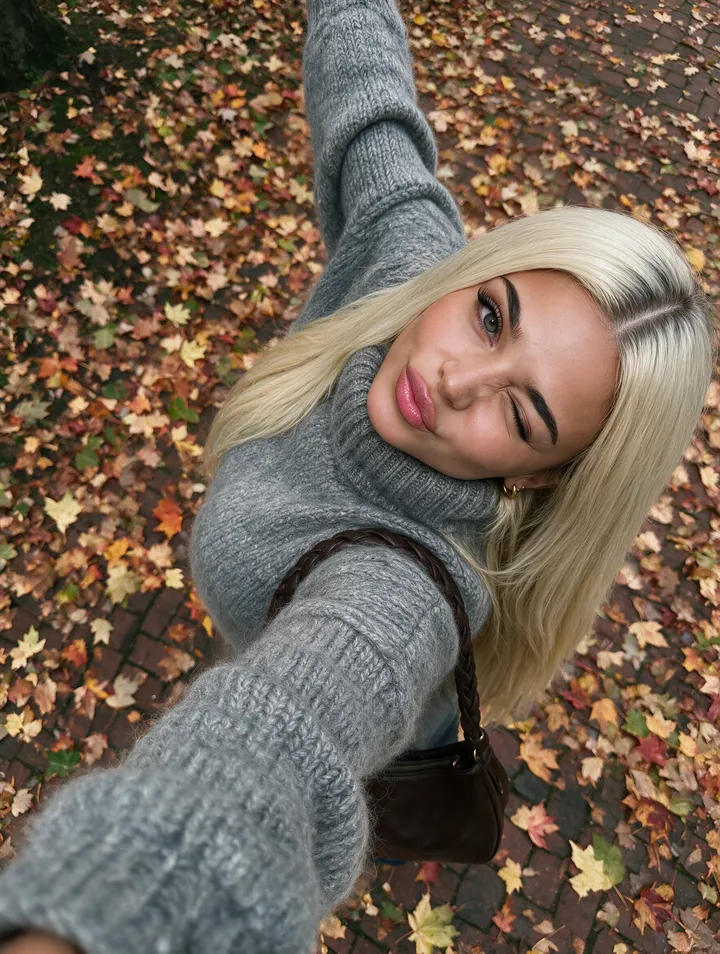
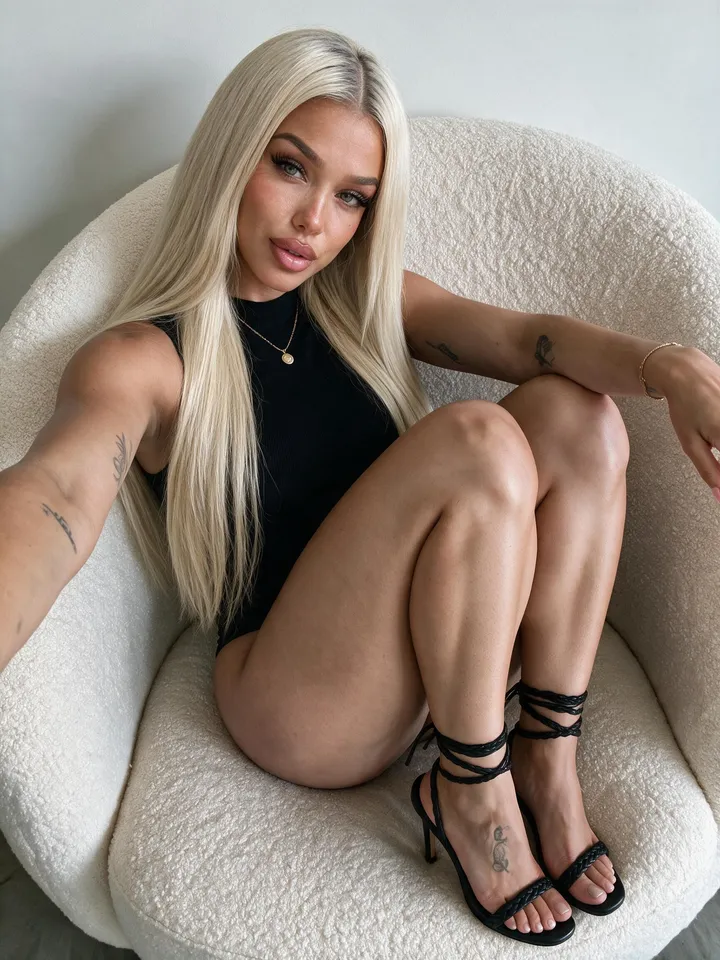
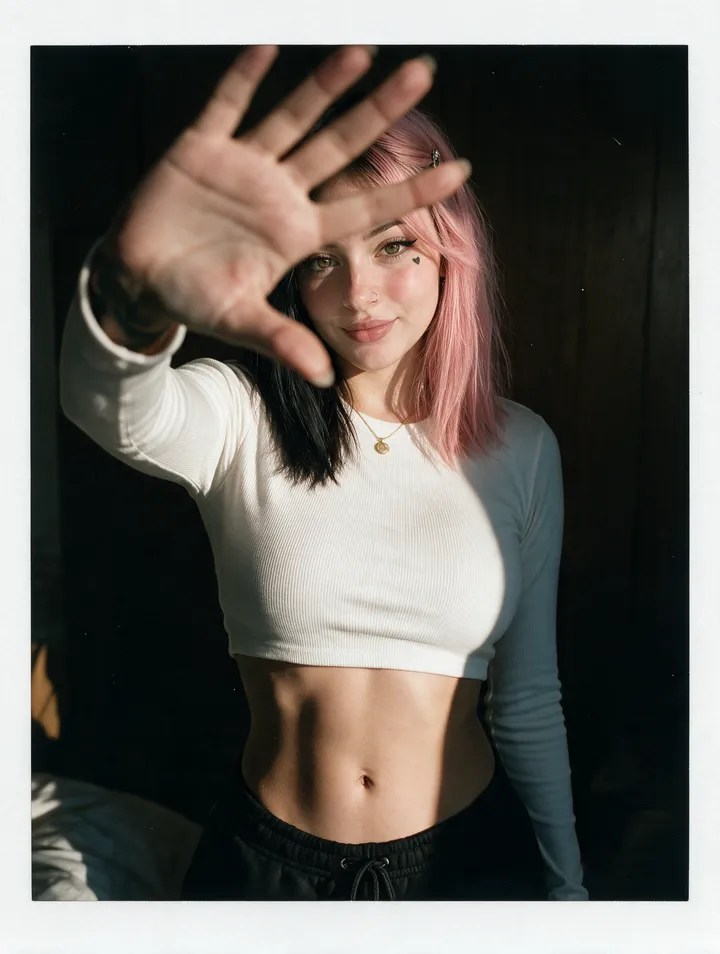
How many reference photos does OFMAI need?
Three. A character is built from 3 reference photos — a portrait, a front view and a back view — with no training step, and it is ready in minutes. That one character is then reused in every generation: photos, short videos, voice notes and image edits all carry the same look, body and morphology.
Three is enough because nothing is trained. A training run infers an identity statistically from many examples, which is why dataset size matters to it; OFMAI stores the character instead, with the three photos anchoring the likeness. Creating one costs 12 credits: 6 for the batch of candidate portraits and 6 to confirm your pick and generate the front and back views. It runs in the browser — no GPU, no install, no model setup.
How many photos does training your own character model need?
Between 10 and 100, depending on the base model. A ComfyUI LoRA tutorial of 28 August 2026 recommends 15 to 30 images for a character and notes that "about 10 excellent images can sometimes work" (eastondev.com). The diyai.io guide of 23 October 2026 gives the same 15 to 30 for SDXL-based models and 30 to 100 for DiT-based ones, warning that below 30 the adapter does not generalise and above 100 you mostly add training time. Scenario, a hosted trainer, puts the sweet spot at 5 to 15, blocks training below 5 and caps the set at 25 to 100 by plan (read in October 2026).
What none of these numbers say is how long the photos take to collect. A character who does not exist yet has none, so the first job becomes generating 15 to 30 consistent images of a person who keeps changing — the problem the training was meant to solve.
How many reference images do general image generators take?
Usually one, and it is not training. Midjourney's character reference accepts several references in a prompt but its documentation says you "probably don't need to" use more than one, that it works best on Midjourney-generated images of a single character, and that it is not designed for photographs of real people and will distort them (Midjourney documentation, read in October 2026). One image steers one generation — the reference has to be passed again next time, and the person shifts a little each time. A reference steers a single image; a character is stored once and reused.
What makes a reference photo usable?
Coverage and sharpness, not volume. Scenario advises the same person in different poses, expressions and outfits and prefers a small curated set to a large inconsistent one (read in October 2026); diyai.io, 23 October 2026, says to vary angles, expressions and lighting and keep one character per image. Resolution has a floor: match the base model, 512×512 for SD1.5 and 1024×1024 or higher for SDXL (eastondev.com, 28 August 2026). The same logic applies to OFMAI's three photos, plus one rule: they must be of you, or of someone who has explicitly authorised their use.
What if the character does not exist yet?
Then the photo count is zero: a character on OFMAI can be designed from a text description instead of photos, and the result is the same reusable character. The training route solves it the long way round — diyai.io, 23 October 2026, covers it under "If your character only exists in your head": generate the reference images first, then train on them. Cloning a real look rewards a dataset; inventing one rewards starting from a description.
What does each route cost in time and money?
Training costs hardware and a wait. The ComfyUI tutorial of 28 August 2026 puts the starting VRAM at roughly 8 GB for SD1.5 and 12 GB for SDXL, and suggests 1,000 to 2,500 steps for a character; diyai.io, 23 October 2026, reports 15 to 30 minutes for an SDXL adapter on a hosted trainer and over an hour for a DiT one — before you collect and caption the dataset.
OFMAI costs credits and no wait: 12 for the character, 2 for a photo, 2 for an image edit, from 7 for a short video. Plans start at $9.99 a month for 30 credits, about $0.67 a photo, and annual billing saves 25%. Credits bought as a top-up never expire, and a failed generation is refunded automatically.
When is training your own model the right route?
When you need to own the weights, or when what you are after is not a person: a file that runs offline on your own GPU with no platform in the loop, a style or an outfit family rather than one individual, or a large clean archive of the same person you already hold. The diyai.io guide of 23 October 2026 sets its own bar at about a dozen or more good images of the character already in hand.
OFMAI is not a local model or a downloadable checkpoint — it is a hosted web app. If full offline control is the requirement, running ComfyUI or Forge locally is the honest answer, and you manage the GPU, the node graphs and the model updates yourself.
Photos needed, route by route
- OFMAI from photos - 3 photos (portrait, front, back). No training, ready in minutes, 12 credits, runs in the browser.
- OFMAI from a description - 0 photos. No training. Same reusable character across photos, video and voice.
- Character reference in a general image generator - 1 image per prompt, passed again every time. No training, no stored identity (Midjourney documentation, read in October 2026).
- LoRA on an SDXL-based model - 15 to 30 images, 512 to 1024 pixels, a GPU with roughly 12 GB of VRAM (eastondev.com, 28 August 2026; diyai.io, 23 October 2026).
- LoRA on a DiT-based model - 30 to 100 images; below 30 it does not generalise, above 100 adds training time (diyai.io, 23 October 2026).
- Hosted trainer - 5 to 15 images, 5 minimum, 1024×1024 recommended, capped at 25 to 100 by plan (Scenario help centre, read in October 2026).
OFMAI in numbers
- creators signed up
- 10,000+
- photos and videos generated
- 60,000+
- videos generated
- 8,700+
Frequently asked questions
How many reference photos do I need to train a consistent AI character?
If you train your own model, 15 to 30 images for an SDXL-based model and 30 to 100 for a DiT-based one (diyai.io, 23 October 2026), or 5 to 15 on a hosted trainer such as Scenario (read in October 2026). If you do not train, far fewer: OFMAI builds a character from 3 reference photos — a portrait, a front view and a back view — with no training, then reuses it in every photo, video and voice note.
Can 3 photos really be enough for a consistent character?
Yes, because nothing is trained. Dataset size matters when a model has to infer an identity from many examples. OFMAI stores the character and runs each generation against it, so the same look, body and morphology carry across scenes, angles and outfits you have never generated before.
Do all the reference photos have to be of the same person?
Yes, and one person per image. Scenario advises the same person in different poses, expressions and outfits (read in October 2026); mixing people, or very different ages or haircuts, is what produces a character who drifts.
What resolution should reference photos be?
1024×1024 or better. The ComfyUI tutorial of 28 August 2026 asks for a consistent size matched to the base model, 512×512 for SD1.5 and 1024×1024 or higher for SDXL; Scenario refuses images whose shortest side is under 700 pixels (read in October 2026).
Can I build a consistent AI character with no photos at all?
Yes, on OFMAI: a character can be designed from a text description instead of photos, then reused in every generation like any other. The training route cannot start that way — you have to generate a coherent set of images of the character first, then train on them.
Does OFMAI train a model on my photos?
No. The character is built from the 3 reference photos with no training step, which is why it is ready in minutes rather than after a tuning run. Nothing to install, no GPU to rent, no model to update.
How much does a character cost on OFMAI?
12 credits — 6 for the batch of candidate portraits and 6 to confirm your choice and generate the front and back views. After that a photo is 2 credits and a short video starts at 7 credits. Plans start at $9.99 a month for 30 credits.
Related: AI character generator · Build a character from your own photos · AI model generator · Guide: consistent AI characters
OFMAI generates synthetic imagery. Uploading photos or cloning the voice of a real person requires that person's explicit consent, enforced by automated and human moderation. Disclose AI-generated content wherever the platform you publish on or applicable law requires it.