Can Two People Share One AI Character and Both Generate From It?
By Marcus, AI generation expert at OFMAI · Updated
Yes. Two people can both generate from one AI character, but only three things ever travel between them: one login, one seat in a workspace that stores the character, or the source files the character was built from. On OFMAI the character is built once - from 3 of your own reference photos with no training, or from a text description - and then reused in every generation with the same look, body and morphology in each output; which of the three routes you use is what settles who can operate it.
Which of the three you pick decides what breaks. A shared login gives both people everything and no record of who did what. A seat gives roles and a shared library, and the studios that document seats gate them to their upper plans. Shared source files mean two separate builds, and a separate build is a new character to approve. Below: the five routes, what seats really give you on Leonardo, Scenario, Synthesia, Picsart, Sozee and three more studios (all read in November 2026), eight things to check, and what a month on one character costs in credits.
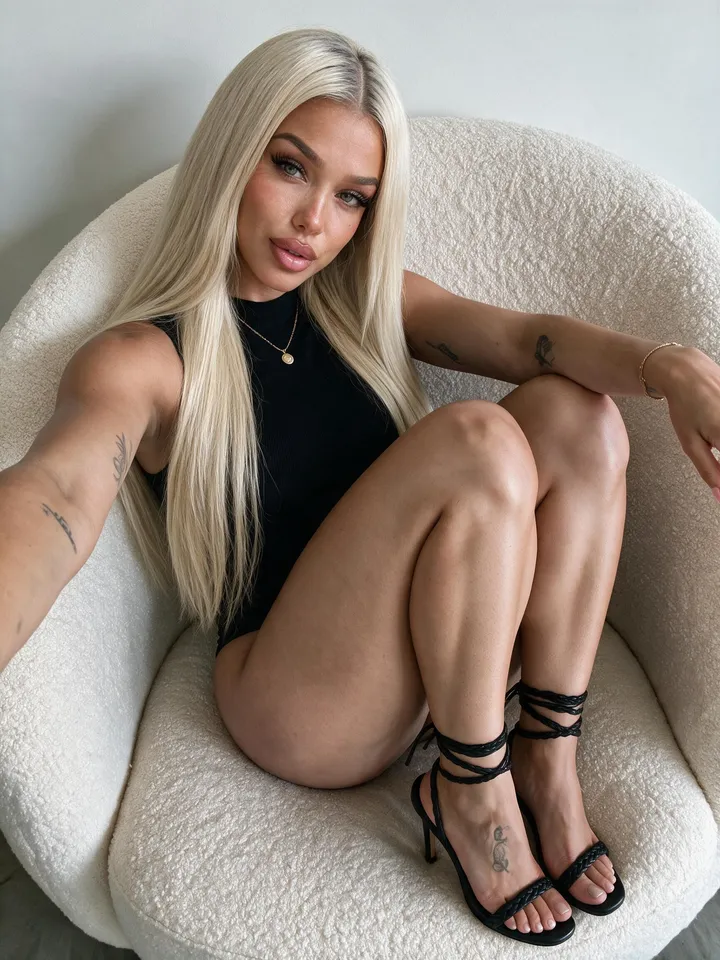
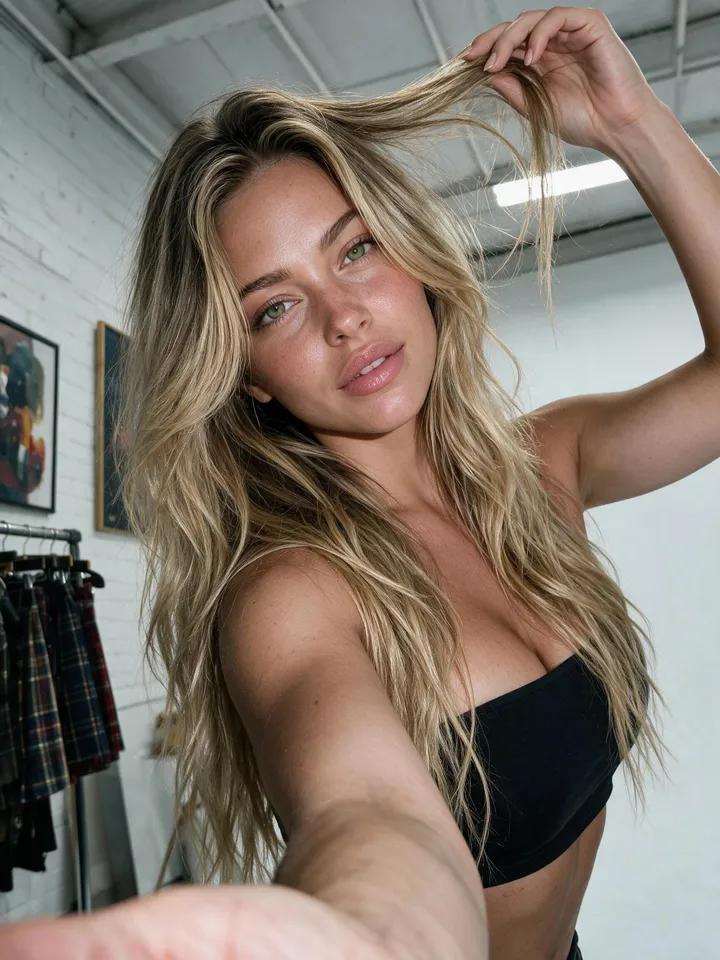
What exactly do two people share when they share an AI character?
One of three things. An account: both sign in to the same studio, so both see the same stored character, the same library and the same credit balance. A seat: each person has their own login and a role, and the character sits in a workspace both seats reach. The source files: the reference photos or the description the character came from, which each person then builds with separately.
They are not interchangeable. The first two give both people one character, which is what keeps outputs on model. The third gives two builds that resemble each other. If the point is that nobody can tell which of you produced a post, the shared object matters more than the shared recipe.
What are the five routes, and which one fits two people?
One shared login. Nothing to set up, works everywhere, and how most two-person teams start. The costs are real: no trace of who generated what, both people inside billing, and a tool's terms may forbid it. Studios that genuinely support two operators use seats instead - on Leonardo, once a Teams plan is paid you invite members by email and assign roles, generations from all team members land in a shared Team Feed, Collections access is governed by team permissions and roles, and only a Team Owner or Admin can buy top-up tokens (Leonardo.Ai help centre, Teams FAQ, read 26 November 2026).
A team workspace that stores the character. The cleanest answer. Scenario's team workspaces are private by default with admin and member roles and invitations from Workspace Settings, and at organisation level the Admin role covers billing, user management, global settings and model management (Scenario workspace page and Knowledge Center, read 26 November 2026). Synthesia does it for one asset type: you can share a Person, the base persona behind a customisable avatar, with named teammates or a whole workspace, and they can then create new outfits from it and generate videos and images - available for creators on Enterprise plans (Synthesia product update, read 26 November 2026).
A shared model file. If the character lives in a trained model you hold, the file can be copied, and neither person depends on the other's account. Licences decide whether you may: on Civitai each resource carries permissions set by its creator, covering whether generated images and the model or its merges may be sold, and some licences forbid redistributing the weights or building a derivative without a separate written licence (Civitai, Guide to Model Licensing Options, read 26 November 2026). Two copies also means two things to keep in step.
Shared source photos, two builds. Independent and cheap, and the one route that gives you two people instead of one. It suits a hand-off far better than parallel production.
One builder, one publisher. One person owns the character and generates; the other selects, edits, writes captions and handles the audience. No sharing problem at all, and for most pairs the honest answer: generating is not the half that needs two pairs of hands.
What should you check before picking a route?
Named seats and roles: can the second person have their own login, or only your password?
Workspace isolation: if one of you works with outside clients, can a character and its library be walled off?
Approval before publishing: is there a state between generated and published?
A shared library: are characters, prompts and approved shots visible to both, or only to whoever made them?
One likeness held across the roster: does the studio store the character, or does each operator re-describe it in a prompt? This is the criterion that decides whether two people produce one person.
Several characters: two people usually means more than one persona eventually, so check the character count before the seat count.
Credits and billing: one pool both people draw on, or a balance per seat? One pool is simpler to budget and easier to drain by accident.
Consent paperwork: if the character came from a real person's photos, the licence has to cover both operators.
What does OFMAI store, and what does a month on one character cost?
OFMAI is a hosted studio built around one recurring character: the character is built once - from 3 of your own reference photos with no training, or from a text description - and reused in every generation, with the same look, body and morphology in each output, and everything runs in the browser with no GPU and nothing to install. The credits are the account's, drawn from its monthly plan, and the Agency plan at 1000 credits a month for $149.99 is the one sized for the volume a roster of characters needs. Who may operate that character is settled by the route you picked above - one account, a seat in a studio that documents seats, or the source files - not by the studio on its own.
The credits are the budget. A character is 12 credits, a photo 2, an image edit 2, a 5-second clip 7 credits at 480p and 13 at 720p, a voice clone 10 credits. Thirty photos and four 720p clips of one character is 124 credits in the first month and 112 after - inside one Business month (300 credits for $49.99), about $0.33 a photo. Plans start at $9.99 for 30 credits, subscription credits renew monthly, purchased top-up credits never expire, and failed generations are refunded automatically. Two accounts instead means rebuilding the character for another 12 credits, so 24 credits for the pair plus two subscriptions.
What breaks when two people run one character from separate builds?
You end up with two people in one library, and the audience notices before you do. A build is not a copy - that is a property of generation in general, not of one studio - so treat a second build as a new character rather than a duplicate: check it against shots you have already published before it goes into a set.
Three habits keep a pair honest. Give one named person the build, so the character is never quietly re-created. Keep the reference set - the 3 photos, or the description the character was designed from - somewhere you both control, because that, not the login, is what the character can be rebuilt from. And keep approved shots in one place, so a new angle is checked against the character you have been publishing.
Then split by job rather than by the generate button. One person owns the character and the generating; the other takes selection, editing, captions, the calendar and the replies on the platforms you post on - one calendar between you, so the same shot is not published twice or two versions of the same day go out. If you both want to publish, settle who holds the publishing logins: the platforms you post on each set their own rules on who may hold and run an account, so read those rules before a second person signs in there.
When is a seat-based studio the better choice?
When the second person is staff or a client rather than a partner. If you need named logins with roles, a record of who generated what, an approval state, client workspaces walled off from each other or billing split per client, pick a studio that documents it: Leonardo invites members with roles on a paid Teams plan, Scenario's organisations carry admin control over billing, users and model management, Synthesia shares the Person behind an avatar on Enterprise plans, and Sozee's own resource page claims native team seats, isolated client workspaces and per-character scheduling in its Agency plan (all read in November 2026; Sozee is describing its own product). None is cheap at that tier.
Four more to check, with where each fact comes from. Picsart's own teams page puts team seats and centralised billing on its higher tier, Ultra, and points you to the seat terms and credit allowance on its pricing page before you add people; it says nothing about sharing a persona across a team (Picsart teams page, read 26 November 2026). Clout AI is reported to document a multi-user workspace with Owner, Admin, Member and Viewer roles, invite links and seat allowances, but no approval hand-offs, client isolation or per-character scheduling; RYLA AI is reported to have no native multi-user features at all, with an Agency plan at $199.99 a month and an API marked "coming soon" as of July 2026 (both as described by Sozee's own comparison, read 26 November 2026 - a vendor describing rival vendors). Make.com is not a character studio but the glue some pairs reach for: its Teams tier adds roles and shared scenario templates, while approval states and client isolation have to be built by hand (same comparison, read 26 November 2026). And D-ID, an enterprise digital-human platform, publishes no seat-and-role documentation we could read on 26 November 2026, so treat its collaboration terms as a sales conversation rather than a published feature.
There is also the case where the character should not be shared at all. If it was built from a real person's photos, the release she signed decides who may operate the likeness, and "my colleague has the login" is not a clause. OFMAI is not for depicting a real person without their consent, and a second operator is exactly the detail a release tends to be silent about.
Five routes for two people and one character
- One shared login - nothing to set up, no record of who generated what, and the tool's terms may forbid it; studios that support two operators use seats and roles instead (Leonardo.Ai Teams FAQ, read 26 November 2026).
- A team workspace that stores the character - roles, a shared library and one character both seats reach: private-by-default workspaces with admin and member roles on Scenario, a shared Person behind an avatar on Synthesia Enterprise plans (both read 26 November 2026).
- A shared model file - neither person depends on the other's account, but each resource carries creator-set permissions and some licences forbid redistributing the weights without a separate written licence (Civitai, Guide to Model Licensing Options, read 26 November 2026).
- Shared source photos, two builds - independent and cheap, and the one route that gives you two people instead of one; better for a hand-off than for parallel posting.
- One builder, one publisher - one owns the character and generates, the other selects, captions and handles the audience.
- On OFMAI - the character is built once and reused in every generation, with the same look, body and morphology in each output, and the route above settles who operates it: 12 credits a character, 2 a photo, 2 an edit, 13 a 5-second 720p clip, plans from $9.99 to $149.99 a month.
OFMAI in numbers
- creators signed up
- 13,000+
- photos and videos generated
- 72,000+
- videos generated
- 11,000+
Frequently asked questions
Can two people share one AI character and both generate content from it?
Yes, in three ways: both sign in to one account, both hold a seat in a workspace that stores the character, or both build from the same source files in their own accounts. Only the first two give you one character; the third gives two builds that resemble each other. On OFMAI the character is built once from 3 reference photos or from a description for 12 credits and reused in every generation, so the same look, body and morphology come back in each output instead of being re-described to a prompt box - and which of the three routes you use is what settles who can operate it. A photo is 2 credits and a 5-second 720p clip 13.
Can two people use one AI studio account at the same time?
Technically usually yes, contractually it depends on the tool - each sets its own rule, so check its terms before sharing a password. Studios that properly support two operators use seats: on Leonardo, once a Teams plan is paid you invite members by email and assign roles, all members' generations land in a shared Team Feed, Collections access follows team permissions and roles, and only a Team Owner or Admin can buy top-up tokens (Leonardo.Ai help centre, read 26 November 2026).
What happens if we each build the same character separately?
You get two characters that look like relatives. A build is not a copy, in any generator, so approve the second one as a new character: compare it against shots you have already published before it goes into a set. On OFMAI the second build is another 12 credits, so a pair of accounts is 24 credits plus two subscriptions. Separate builds suit a hand-off; for two people posting in parallel to one audience, share the account or the workspace.
How many characters can two people manage from one account?
Check the character count before the seat count: two people usually means a second persona before it means a second login. What a character costs is what you budget - on OFMAI a character is 12 credits, so five characters is 60 credits before a single photo, twice what a Starter month holds (30 credits for $9.99) and a small share of an Agency month (1000 credits for $149.99), which is why Agency is the plan sized for a roster. Seat-based studios tie slots to the plan instead: Sozee places both team seats and multiple character slots in its Agency plan (read 26 November 2026).
Who should own the character build in a two-person team?
One named person, not whoever is free. Give one person the build - creating the character and re-creating it if it ever has to change - and give the other selection, editing, captions and the audience. Keep the reference set itself, the 3 photos or the description the character was designed from, somewhere you both control: that, not the login, is what the character can be rebuilt from if an account is lost.
Does sharing a character need the model's consent if she is a real person?
Yes, and the licence has to cover both operators, not only the person who signed it. A release written for one creator generating her own content says nothing about a second person producing and publishing in her likeness, so settle who may operate it, for how long and on what, in writing, before either of you generates. OFMAI is not for depicting a real person without their consent.
What does a month cost for two people running one character?
On OFMAI, thirty photos and four 5-second 720p clips of one character is 124 credits in the first month and 112 after, which fits a Business month (300 credits for $49.99) at about $0.33 a photo. Plans start at $9.99 for 30 credits and Agency is 1000 credits for $149.99; failed generations are refunded automatically. Seat-based studios price the second operator instead of the output - Synthesia's shared Person is on Enterprise plans, Sozee places team seats in its Agency plan (both read in November 2026).
Is there a free way for two people to collaborate on one AI character?
Only by splitting the jobs rather than the tool: one paid account, one person generating, the other on selection, captions and publishing with no account of their own. Free tiers are per person and do not share a stored character, so two of them means two separate builds. Paid plans on OFMAI start at $9.99 a month for 30 credits, which covers a character at 12 credits and a first set of photos at 2 credits each.
Related: AI character generator · How many reference photos a character needs · Fix a character whose look drifts · Keep a body and morphology consistent · Contracts for a real model's likeness · OFMAI pricing and credits
OFMAI generates synthetic imagery. Uploading photos or cloning the voice of a real person requires that person's explicit consent, enforced by automated and human moderation. Disclose AI-generated content wherever the platform you publish on or applicable law requires it.
One character, reused in every generation, 2 credits a photo
Build the character once from 3 of your own photos or from a description, then work from that stored character instead of two prompt boxes: the same look, body and morphology come back in every generation. A character is 12 credits, a photo 2, an image edit 2, a 5-second 720p clip 13, and plans run from $9.99 a month for 30 credits up to 1000 credits for $149.99. Failed generations are refunded automatically.