
Can You Put an AI Influencer in Branded Clothing and Keep the Outfit Consistent?
By Marcus, AI generation expert at OFMAI · Updated
Yes, with one honest caveat: the person and the garment are two separate problems. The person is solved by storing the identity once instead of re-describing it — OFMAI builds one character from 3 reference photos or from a description, with no training step, and every later photo, video and voice note runs against that stored character, so the same look, body and morphology carry across the campaign.
The outfit is solved by discipline rather than by the model: a garment reference, a prompt template reused verbatim, one variable changed per shot. What no generator holds reliably is the fine print of a branded piece — logo, print placement, trim — and the fix for that is a targeted edit, not a reroll. Below: the reference set a branded shoot needs, how to hold an outfit across 50 images, what it costs, and when a catalogue platform is the better buy.
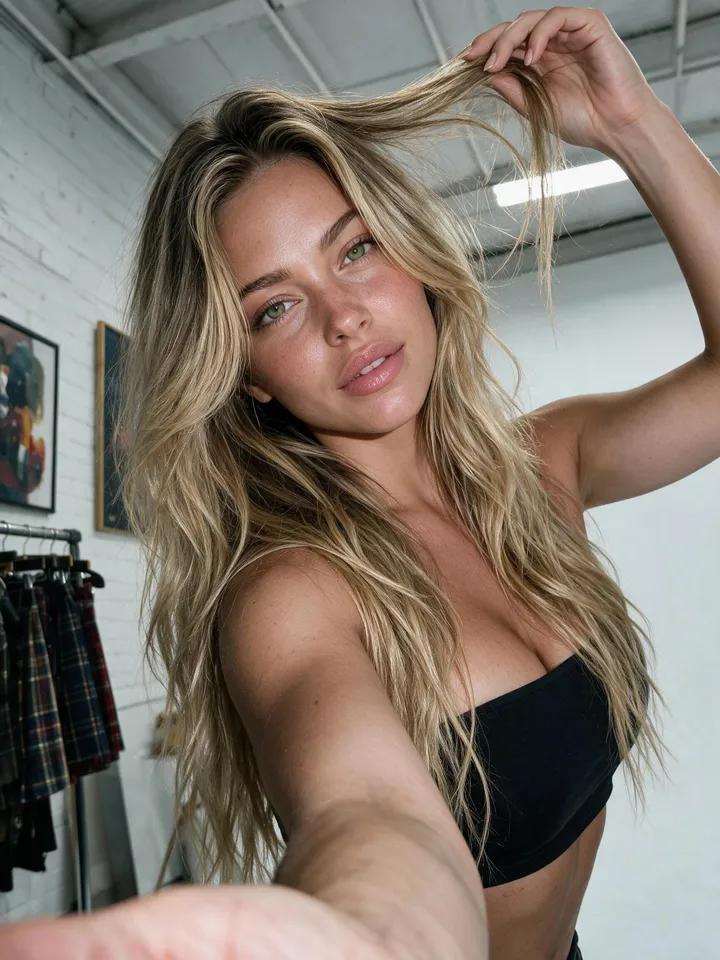
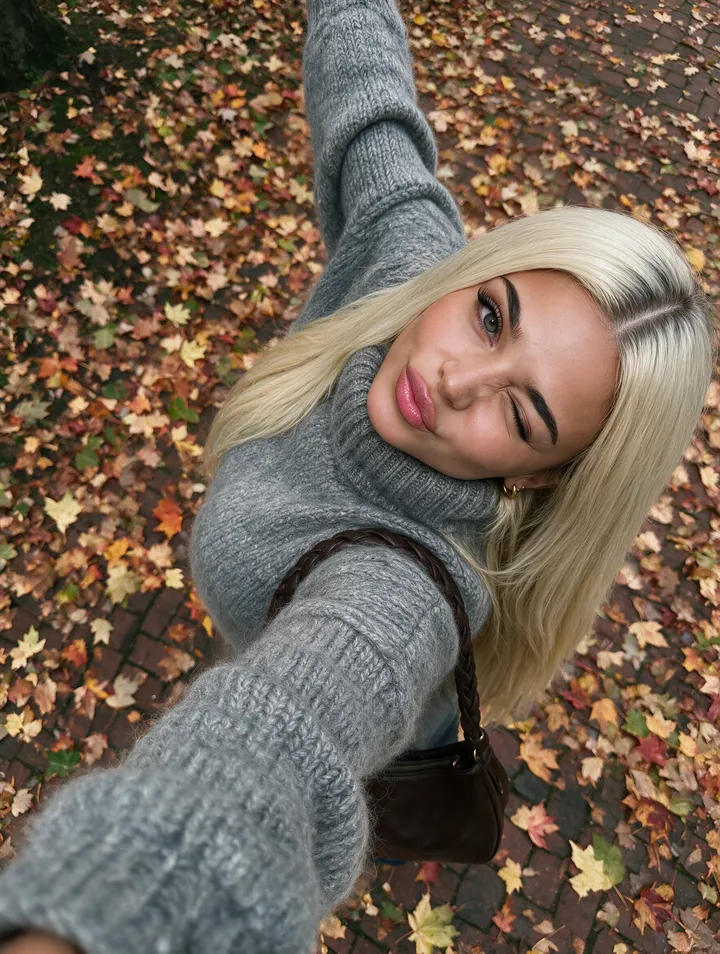
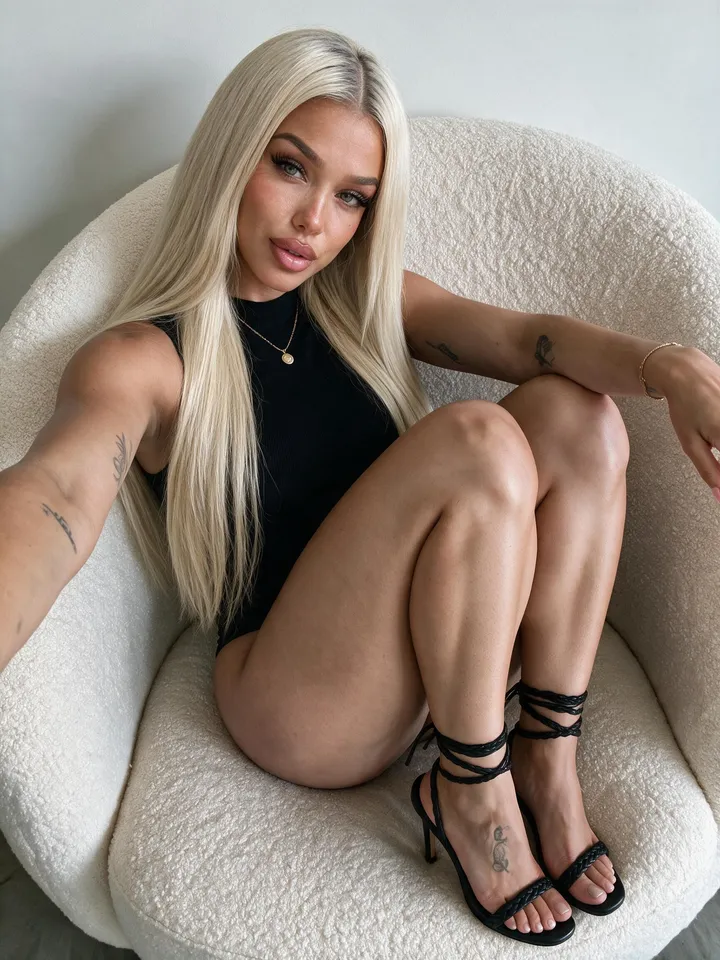
Can I put an AI influencer in branded clothing and keep the outfit consistent?
Yes for the person and the overall look, mostly yes for the garment, not reliably for the logo. Store the identity as a reusable character so the wearer never changes, work to one garment reference per piece, reuse one prompt template with only the garment and the scene varying, and review each batch as a grid.
On OFMAI the first half is built in: the character is created once for 12 credits and reused in every generation, so you write the outfit and the location, never the person again. A photo is 2 credits; an image edit is 2, which is what you use on a crooked logo instead of regenerating the frame.
Why does a prompt hold a style but not a specific garment?
Because words describe a category and a branded piece is an individual object. Cliprise's brand-lookbook workflow guide, read in November 2026, splits it cleanly: prompts reliably control aesthetic direction, clothing description, environment type and pose direction, but not the person's identity, exact skin tone and hair, colour temperature between sessions, background depth and texture, or how fabric texture renders.
Graswald's guide to consistent fashion imagery across a catalogue, read in November 2026, says why that bites hardest on branded clothing: a general-purpose tool builds each image from scratch with no persistent memory of the brand's look, so logos warp and prints break — and a distorted logo, it notes, reads instantly as fake.
What reference set does a branded shoot need?
Three references, not one. Cliprise's guide, read in November 2026, calls it a three-reference architecture: a model portrait that fixes the person, a style-and-lighting reference generated with no model in it, and one garment reference per item — flat lay, ghost mannequin or hanger shot. Its rules: 8 to 10 portrait variants judged on distinctiveness and on skin texture at 100% zoom, 4 to 6 style variants, and every reference above 1024 pixels, since an undersized one is a named cause of identity drift.
On OFMAI the first reference is not a file you re-attach each time — it is the stored character, built from a portrait, a front view and a back view, or designed from a description.
How do you build the character on OFMAI, and what does a campaign cost?
You create the character once — from 3 of your own reference photos, with no training, or from a written description — and reuse it across photos, video and voice notes. That is 12 credits end to end: 6 for the candidates and 6 to confirm your choice and generate the reference angles. A photo is then 2 credits, an image edit 2, video from 7 credits, up to 25 for a 5-second 1080p clip.
Price a season before you shoot it. A 50-image drop is 100 credits plus 12, so 112 in all. Pro gives 100 credits for $24.99 a month, or 50 photos; Business 300 for $49.99; Agency 1000 for $149.99. On Starter, $9.99 for 30 credits, a photo works out at about $0.67. Subscription credits renew monthly, purchased credits never expire, and failed generations are refunded automatically.
How do you hold one outfit across a 50-shot list?
With a template you do not retype. Cliprise's guide, read in November 2026, orders the prompt in six blocks: the reference lock, identical every time; the garment; pose and interaction; environment; the shot specification — full body, three-quarter, detail, lifestyle; and the photography technical block, almost constant. Only the garment and the scene move, because a generator reads a synonym as a new instruction.
It also sets the session shape: two warm-up rounds of four images — four poses to check the person holds, then four with no model to check the lighting — with the reference fixed first if either fails. Then one garment at a time, hero, three-quarter, detail, lifestyle, finished before the next, with a grid review every 10 images. Its own result: 50 images with 6 consistency failures in a first season, 3 in the second.
What about the logo, the print and the trim?
This is the part to be honest about. Graswald's guide, read in November 2026, sets the bar as the logo crisp, the print aligned and the trim and hardware right, and its recommended fix is targeted correction of logos and product details rather than regenerating the image, which avoids new errors elsewhere in the frame.
That is what an image edit is for: 2 credits on OFMAI, changing one detail in a frame you already approved. Budget edits in rather than counting them as failures — 50 images with ten edits is 120 credits. And if a logo has to be pixel-exact for a paid deliverable, plan a human retouch pass, or photograph the real garment.
How do you build a wardrobe that stays on-brand over months?
Treat it as a capsule, not a costume box. Apatero's AI influencer wardrobe guide, dated January 2026 and read in November 2026, sizes it at 15 to 20 pieces — 5 to 7 tops, 4 to 6 bottoms, 3 to 4 dresses, 2 to 3 outerwear, 3 to 4 athleisure — starting from 10 to 15 outfit combinations and adding 1 to 2 pieces a month.
It pins the brand layer to a palette of 5 to 8 colours (2 to 3 primary, 2 to 3 secondary, 1 to 2 accent), named precisely, and to signature elements at a deliberate frequency: silhouettes in 70 to 80% of images, colours 60 to 70%, accessories 50 to 60%, details 40 to 50%. Its garment description order is fabric, colour, style, garment type, then fit; its failure list is no defined style, too much variety, inconsistent colour, vague prompts, a style that misses the niche.
How do you check a batch, and when is OFMAI the wrong tool?
Check against a fixed list, not a feeling. Cliprise's guide, read in November 2026, uses six checks per image: identity matches the reference, garment colour matches the product reference within tolerance, lighting direction consistent, background depth consistent, aspect ratio right for the destination, no visible artefacts. Two failures or more means regenerate. Two of its mechanical fixes travel well: a hex value beside the colour name when the colour is the product, and one aperture equivalent locked across the set.
OFMAI is the wrong tool when the job is a catalogue rather than a persona. For thousands of SKUs and colourways, Graswald's guide, read in November 2026, describes the right shape: a brand profile locked once and applied across SKUs, with PIM and DAM integration so each image stays attached to its SKU. If you want the weights on your own hardware, train an adapter locally. If you want a distinctive art style with nobody recurring, a general-purpose generator such as Midjourney or Leonardo fits better. And permission is never a feature: get the brand's written sign-off before you publish, and check the AI-content rules of the platforms you post on.
At a glance: what holds, and what does not
- Holds reliably — the person: a stored character keeps the same look, body and morphology across every shot, outfit and location. 12 credits once, then 2 a photo.
- Holds with discipline — the outfit: one garment reference per piece, a prompt template reused verbatim, one variable per shot, one garment finished before the next.
- Does not hold reliably — logos, prints, trim and hardware: expect targeted edits at 2 credits each, plus a human retouch pass for anything a brand pays for.
- Expect some loss: Cliprise's guide, read in November 2026, reports 6 failures in a first 50-image season and 3 in the second.
- Wardrobe sizing, per Apatero's guide dated January 2026: a 15 to 20 piece capsule, 10 to 15 combinations, 5 to 8 colours.
OFMAI in numbers
- creators signed up
- 10,000+
- photos and videos generated
- 61,000+
- videos generated
- 9,000+
Frequently asked questions
Can I put an AI influencer in branded clothing and keep the outfit consistent?
Yes for the person and the overall look, and largely yes for the garment if you work to a garment reference and reuse one prompt template with only the outfit and scene varying. On OFMAI the character is stored once for 12 credits and reused in every generation, so the wearer never changes. The exception is fine detail — logos, prints, trim — corrected with an image edit for 2 credits.
Will the logo on the garment come out right?
Not dependably. Graswald's guide, read in November 2026, notes that general-purpose tools distort logos and break prints because each image is built from scratch with no memory of the brand's look, and that a distorted logo reads instantly as fake. Its fix is targeted correction, not regeneration: on OFMAI an image edit at 2 credits, plus a human retouch pass for a paid deliverable.
Do I need to train a model to keep the outfit consistent?
No. Training affects the person, not the clothes — and on OFMAI there is no training step: the character is built from 3 reference photos, or from a description, and reused in every generation. Outfit consistency comes from a garment reference, a reused prompt template and a disciplined shot list.
How many outfits should I plan before the first shoot?
Apatero's wardrobe guide, dated January 2026 and read in November 2026, recommends starting from 10 to 15 outfit combinations drawn from a 15 to 20 piece capsule, then adding 1 to 2 pieces a month. Document each piece with the prompt wording that produced it: the wording is what you reuse, not the image.
Does the outfit carry into video?
Yes, if you animate a still you already approved rather than describing the garment again — the piece is already in the frame you signed off, and one character is reused across photos, video and voice notes. Video starts at 7 credits, up to 25 for a 5-second 1080p clip.
What does a 50-image branded drop cost on OFMAI?
100 credits for the photos plus 12 for the character, so 112; ten image edits take it to 132. That fits inside Business, 300 credits for $49.99 a month. Purchased credits never expire.
Can I use a real brand's clothing in AI-generated images?
That is a permission question between you and the brand, not a technical one, and no generator resolves it. Get written sign-off on AI-generated imagery of the product before you publish, and check the AI-content rules of the platforms you post on — each sets its own.
Related: AI influencer generator · AI UGC generator · Keep an AI model's body consistent · How to make AI photos look less AI · AI character generator · OFMAI pricing
OFMAI generates synthetic imagery. Uploading photos or cloning the voice of a real person requires that person's explicit consent, enforced by automated and human moderation. Disclose AI-generated content wherever the platform you publish on or applicable law requires it.